- Home
- Repair or replace?
Repair it, or replace it? Six questions.
The question we're asked most. Answer six questions about your system — at home or at work — and you'll see which way they lean, and why.
This is a guide, not a quote, and it doesn't know your equipment. The answers weigh the things we'd weigh on a visit; the visit is what decides it. No prices are used or implied.
On a visit, we look at the same six things — and show you.
Age from the data plate, the repair history, the refrigerant, the part that's failed, the comfort complaints and your plans. Then we give you both numbers when it's close: what the repair costs and what a replacement costs, side by side.
If a repair is the sensible answer, we'll say so, even when a replacement would be a bigger job for us.
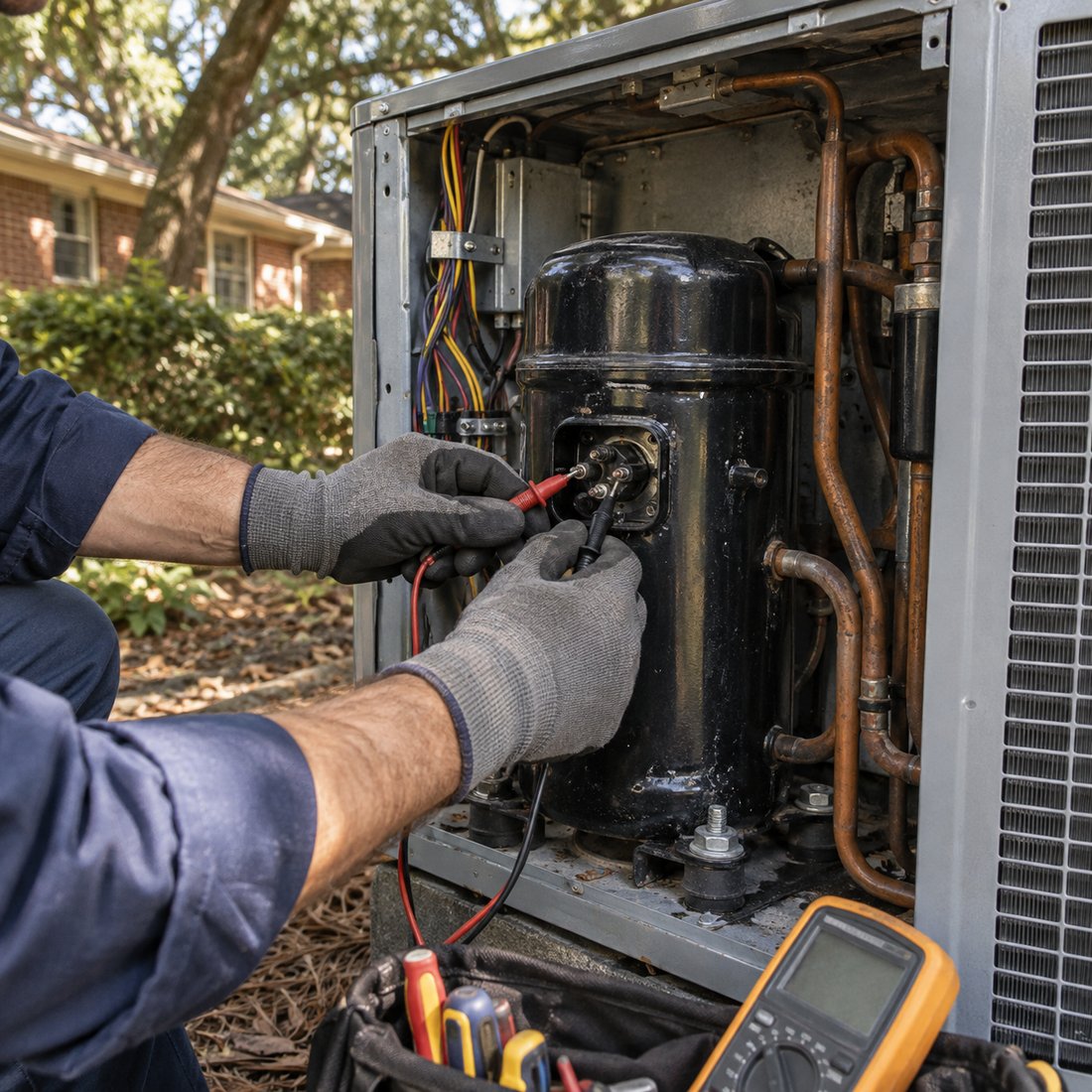
Some answers aren't about money.
A cracked heat exchanger
It can let carbon monoxide into the air. The furnace should stay off until it's inspected, whatever the other answers say.
No heat in a cold snap
If someone at home or at work can't be without heat, a repair that gets it running now is the right first step — the replace decision can follow.
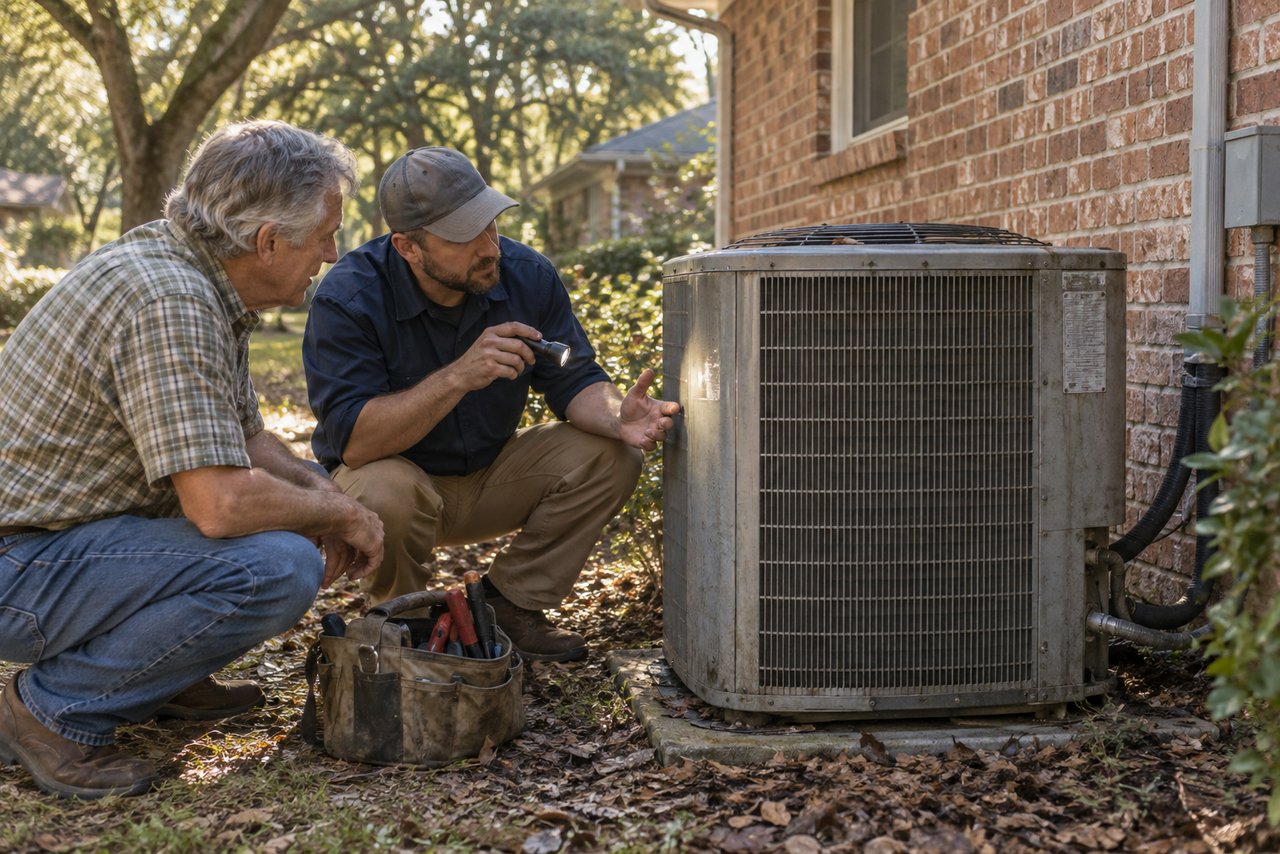

For a building, answer per unit.
A shop or office with several units is really several decisions. Answer the questions for the one that's failing — and if more than one is getting old, ask us about planning the others before they force the issue.
For a house, answer for the system that's failing.
Many houses have one system for downstairs and one for upstairs. They rarely age out together; answer for the one in trouble.
Get both quotes on one visit.
Repair and replacement, side by side, with the reasons.